1970 C10 12 Bolt Rearend How Do You Know What Gear You Have
When information technology comes to Chevrolet rearends, it's the 12-commodities that seems to get all the accolades. Rightfully so, because when comparing the x and 12-bolt units, it'southward definitely the more durable of the two. That's usually proven when used in loftier-operation, high-horsepower applications. Only for all intents and purposes, the 10-bolt rearend is a great unit for a street/strip car, and tin can exist stout enough to handle fifty-fifty the occasional abuse delivered by use at the racetrack.
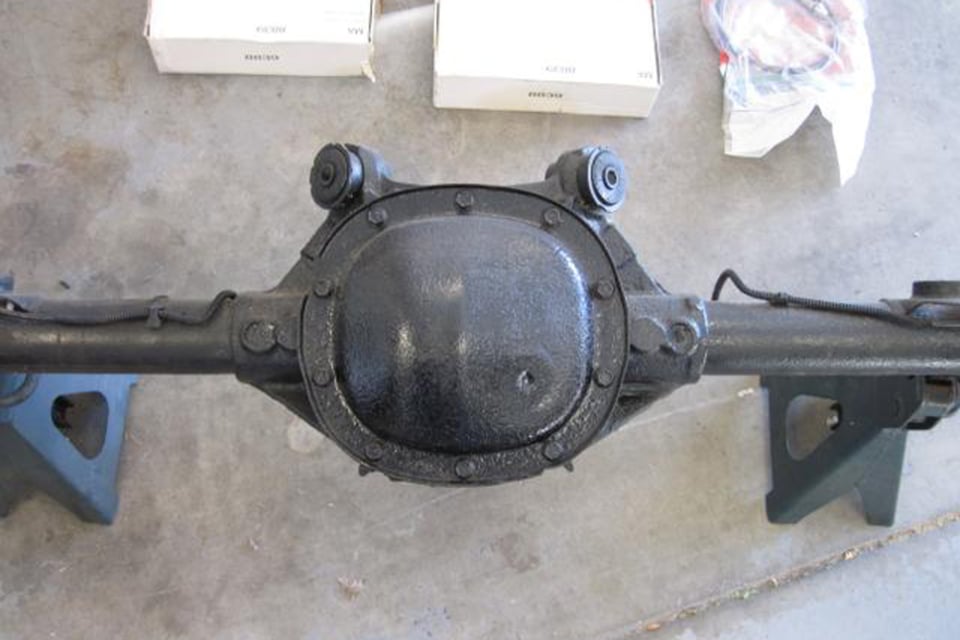
The seven.5 rearend uses an oval cover and the housing has two pocket-size bandage-in protrusions nearly two of the bottom embrace bolts. The control arm-mounting ears on superlative of this 7.5 rearend denotes it is usable for any 1978-'88 GM A or Thou-body intermediate like a Cutlass, Monte Carlo, El Camino, Malibu, Regal, or Grand Prix.
Finding a 12-commodities that is "affordable," is getting to be a most incommunicable endeavor. For that reason, many enthusiasts are considering the x-bolt. But, did you know there is more than one style of 10-bolt rearend? One is the small, 7.v-inch, some other is the 8.ii-inch, and even so two more than are the eight.5 and eight.half-dozen-inch. If you're looking for a good.economical 10-bolt rearend to rebuild or install into your hot rod, you will need to be able to accurately identify the unlike units so yous don't accidentally come home with a 7.5 or 8.2-inch differential.
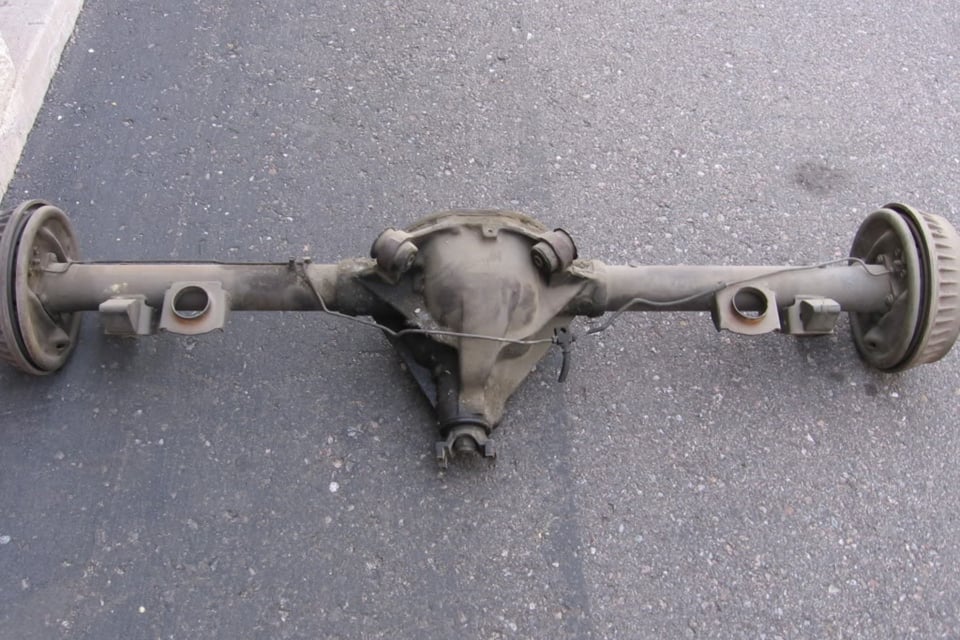
If you locate a rearend that has whorl bound perches, it could be from a G, A, B-torso, or El Camino.
The 8.five-inch 10-bolt rearend was used in cars and trucks over a wide range of years. Information technology first appeared in 1970 product cars equally a corporate replacement for the 8.ii-inch 10-bolt rearend. Information technology was used in different models by all GM divisions – with the exception of Cadillac. Since it was so widely used, there is a ameliorate possibility of finding one of them at a relieve g than locating a 12-bolt. That is the impetus for why nosotros decided to put this swap meet/junkyard identification guide together. That way, you don't unknowingly spend money on something you really do not want.
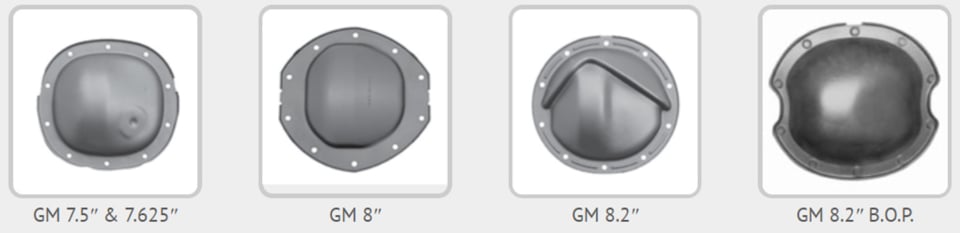
While the ten-commodities rearend's lineage can exist identified by the code stamps, which are normally on the passenger's side beam tube, at that place are literally hundreds of potential codes for the three unlike x-bolt rearend housings. Since listing them all within this article is impossible, we'll be focusing only on visual identification.
7.5-Inch
Although the vii.five-inch x-bolt closely resembles the viii.five-inch housing, you can positively identify the Chevy 7.5-inch rearend by measuring it. The oval-shaped embrace measures 8 5/sixteen inches past 10 ix/16 inches. The distance betwixt the lesser center bolt in the cover and its adjacent bolts is 3 1/four inches. Within, the band-gear bolts are the same equally the viii.5 corporate unit, but the pinion-shaft diameter measures 1.438 inches. Like almost ten-bolts, the axles are held in place by C-clips on the inner end of the axles.
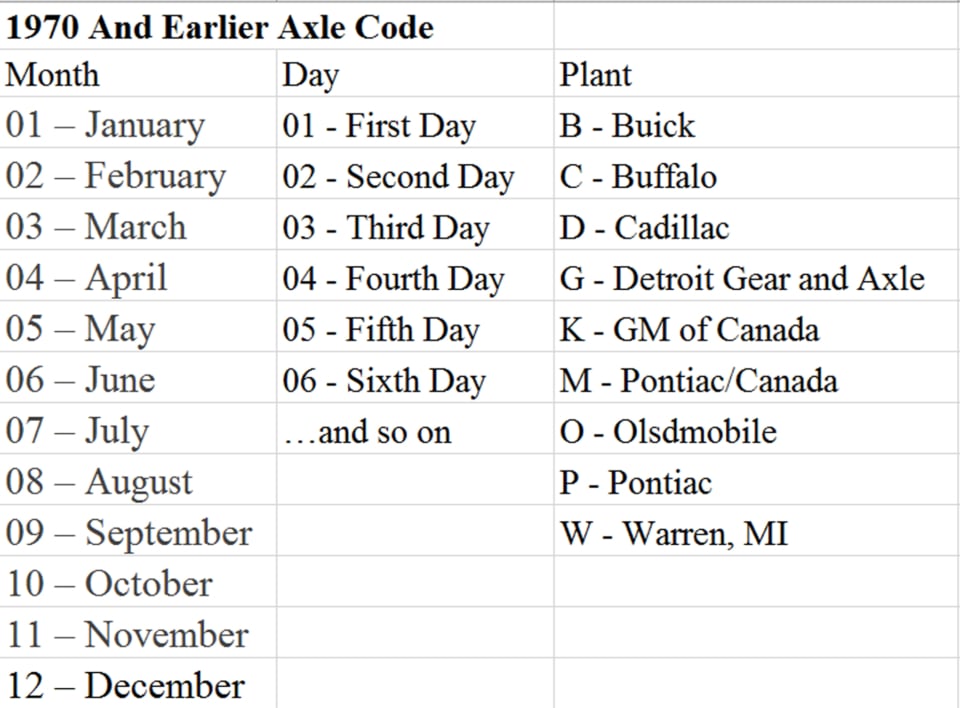
Appointment and location of industry are stamped in the axle tube, and this table deciphers the code.
Many times, if y'all locate a x-commodities rearend, it's usually a 7.5-inch unit. These take been around since 1975, and were installed under cars, pocket-sized trucks, and vans up to the 2005 model yr. If used in a daily driver or cruiser application, the 7.5-inch rearend should survive backside an engine with 350hp, if traction is limited during spirited driving. If sticky tires are used, you'll quickly turn the seven.5-inch rear into a pile of unusable parts.
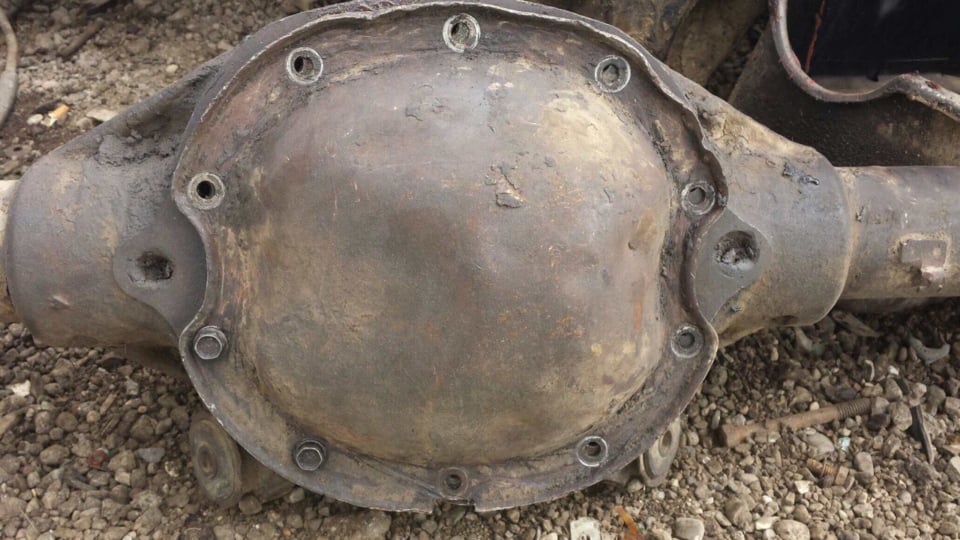
This is an 8.2 BOP axle. BOP stands for Buick/Oldsmobile/Pontiac. Information technology is internally unlike from the 8.two Chevy, simply has the same external bosses and brackets. Notwithstanding, the gears will not interchange with a Chevy viii.2. The axle shafts are also held in place by four-bolt servant plates at the outer bearing, not C-clips.
8.2-Inch
There were an untold number of 8.2-inch axle assemblies built, and although it is merely marginally stronger than the 7.v-inch rearend, it does have some aftermarket support. That being said, it is not recommended for use behind engines that make a serious amount of horsepower. Again, this would be okay in a daily driver or cruiser application, but if installed backside an engine with horsepower numbers climbing into the 400 range, yous can program on an eventual failure. While a carrier-bearing girdle is available for the viii.2-inch rearend – and does give some support to the housing – information technology doesn't provide a reliable and suitably strong solution.
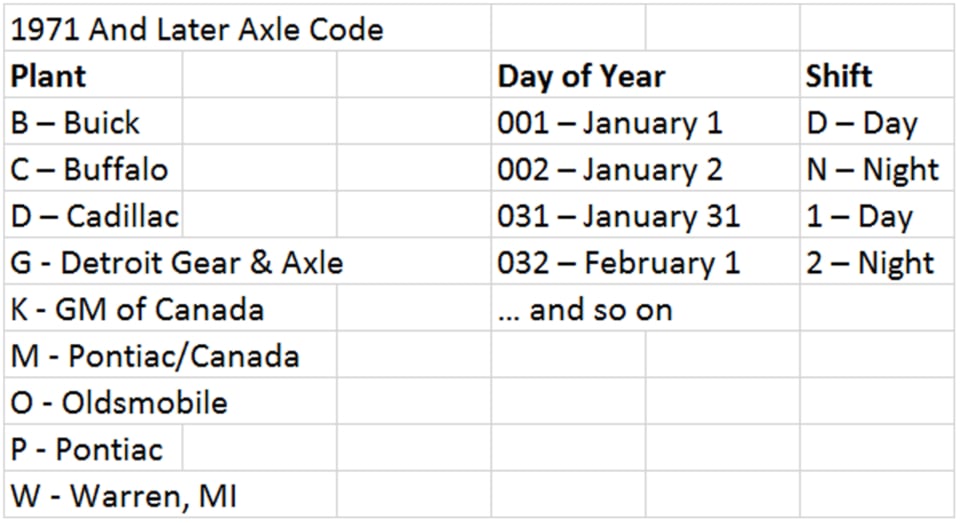
The date and location of industry coding changed in 1971.
The easiest way to place the viii.2-inch rearend at a glance is by the shape of the housing and the spacing between the lower bolts on the cover. The viii.2-inch 10-bolt has a smoothen, round, lower-case surface area (no cast-in protrusions), with an 11-inch encompass that has a diagonal protrusion at the top. It also uses a 10 v/8-inch irregular-shaped encompass. The pinion nut should likewise measure 1 ane/viii inches, if the OEM pinion nut is however in utilise.
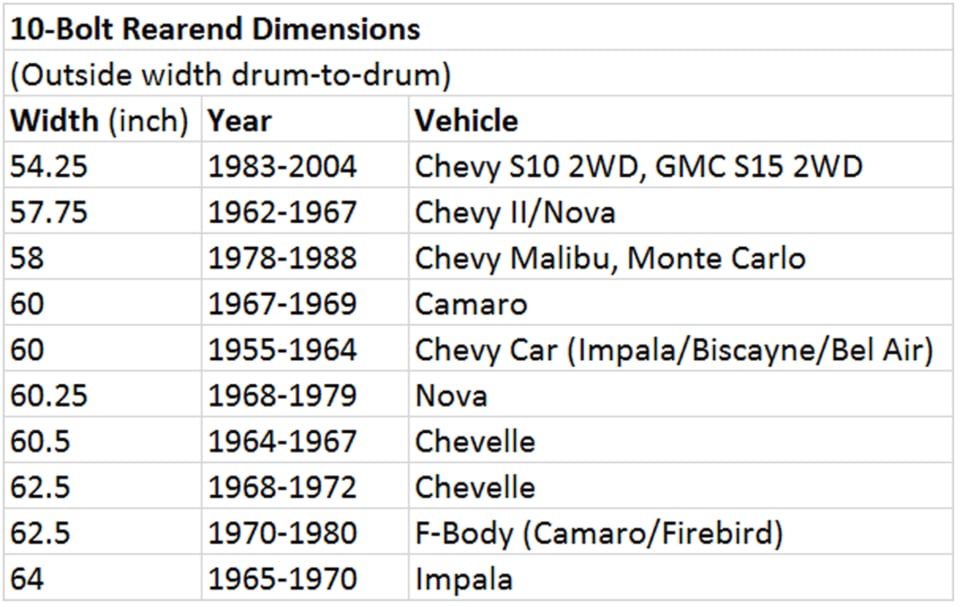
Inside the 8.ii-inch 10-commodities, the ring-gear bolts accept ix/16-inch socket heads with 3/8-24 left-mitt threads. The pinion diameter is ane.438 inches, and has 25 splines. Similar all Chevy 10-bolts, the axles are retained past C-clips on the inner end of the beam shaft inside the carrier.
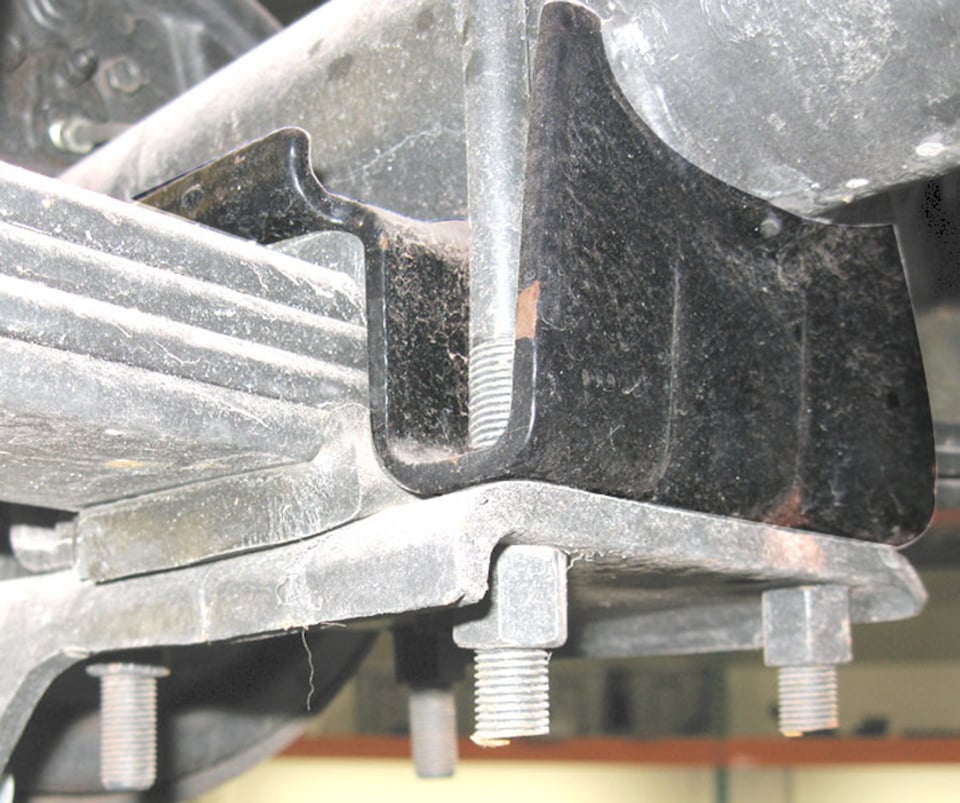
If you find a rearend that uses a large spring perch like this, it is from either an X or F-Body.
8.5-Inch
The 8.5-inch and 8.half-dozen-inch ten-bolt rears are stout and effective differentials that tin can handle more than power than either the vii.5 or 8.2-inch rears. While the viii.5-inch rearend was used on vehicles upwardly to 1999, The viii.6-inch (8.625) was used on 2000 and after-year trucks. The easiest mode to tell the difference is by looking at the brakes. All 8.6-inch rears have disc brakes, and eight.five-inch units have drum brakes.
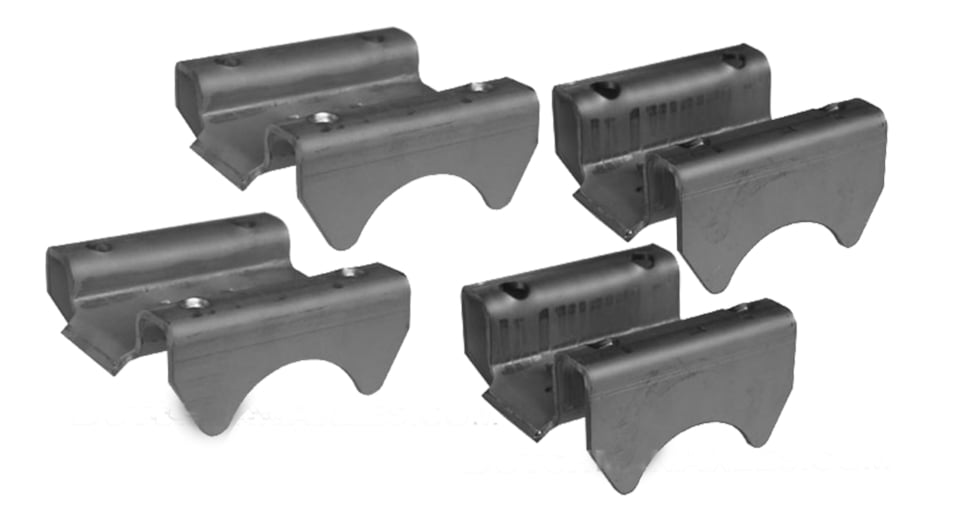
The X and F-torso spring perches come up in 2 versions: mono-leaf (left) which is shallower than the multi-leaf (right).
The 8.5-inch 10-bolt rearend is hugely popular because aftermarket carriers and gears are hands interchangeable. Originally, gear ratios ranged from 2.41 through 4.ten. You will need to know that there are dissimilar series' of differentials (series ii and 3). With the exception of truck differentials with 30-spline axles, and those conveying ii.41 and 2.73 gears (series two), the differentials volition support all gear ratios without having to change carriers. The 8.5-inch ten-commodities also shares the same pinion shaft bore as the more than expensive 12-bolt.
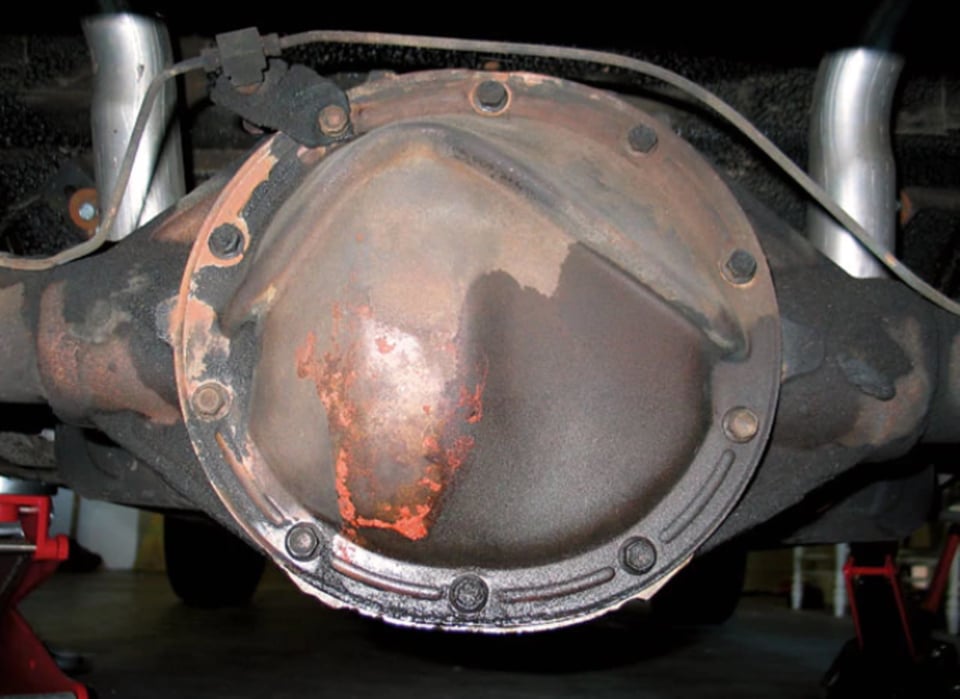
When looking at the housing from the rear, an 8.5 will have two squared off chunks of casting hanging on each side most the lesser of the differential. An 8.2 (shown) will accept the same contour equally the cover. Most viii.2 manufacturing plant covers also accept the foreign protrusion at the pinnacle.
Nearly 8.five-inch 10-bolt rearends take two extruded, cast-in lugs on the bottom of the differential housing at the 5:00 and 7:00 positions. The covers on the 8.five-inch rearends are frequently 11 inches round with a burl on the driver'due south side to arrange the ring gear. The distance between the lower center bolt on the cover and either next bolt is 3 3/4 inches. The OEM pinion nut is i 1/4 inches.
The viii.5-inch 10-bolt rearends have ten 3/4-inch hex head bolts with 7/16-20-inch left-manus thread bolts that hold the ring gear to the carrier. The pinion shaft bore is ane.625 inches and will have either 28 or 30 splines. Like the 8.2-inch 10-bolt, the viii.five ten-bolts utilise C-clips to retain the axles.
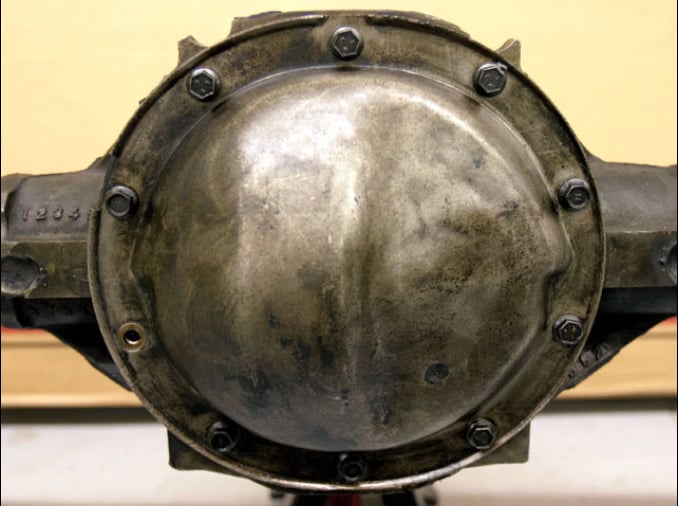
The 8.five rearend will have a circular cover, and part of the cover will extend rearward to make room for the ring gear. You will also detect the large, flat, cast-in protrusions at the five and 7 o'clock positions. These protrusions are larger than those on the vii.5 rearend.
There is an anomaly to the "corporate" 8.5-inch axle assembly that was used in some 1971 and 1972 Buick, Oldsmobile, a few 1969 through 1972 Pontiac vehicles, as well as the 1970 through 1972 Monte Carlo. Instead of using a C-clip to hold the axle in the housing, these axle assemblies use commodities-in axles, much like an 8.two BOP rearend. Adept luck finding one of these, yet, as they are very popular among operation enthusiasts.
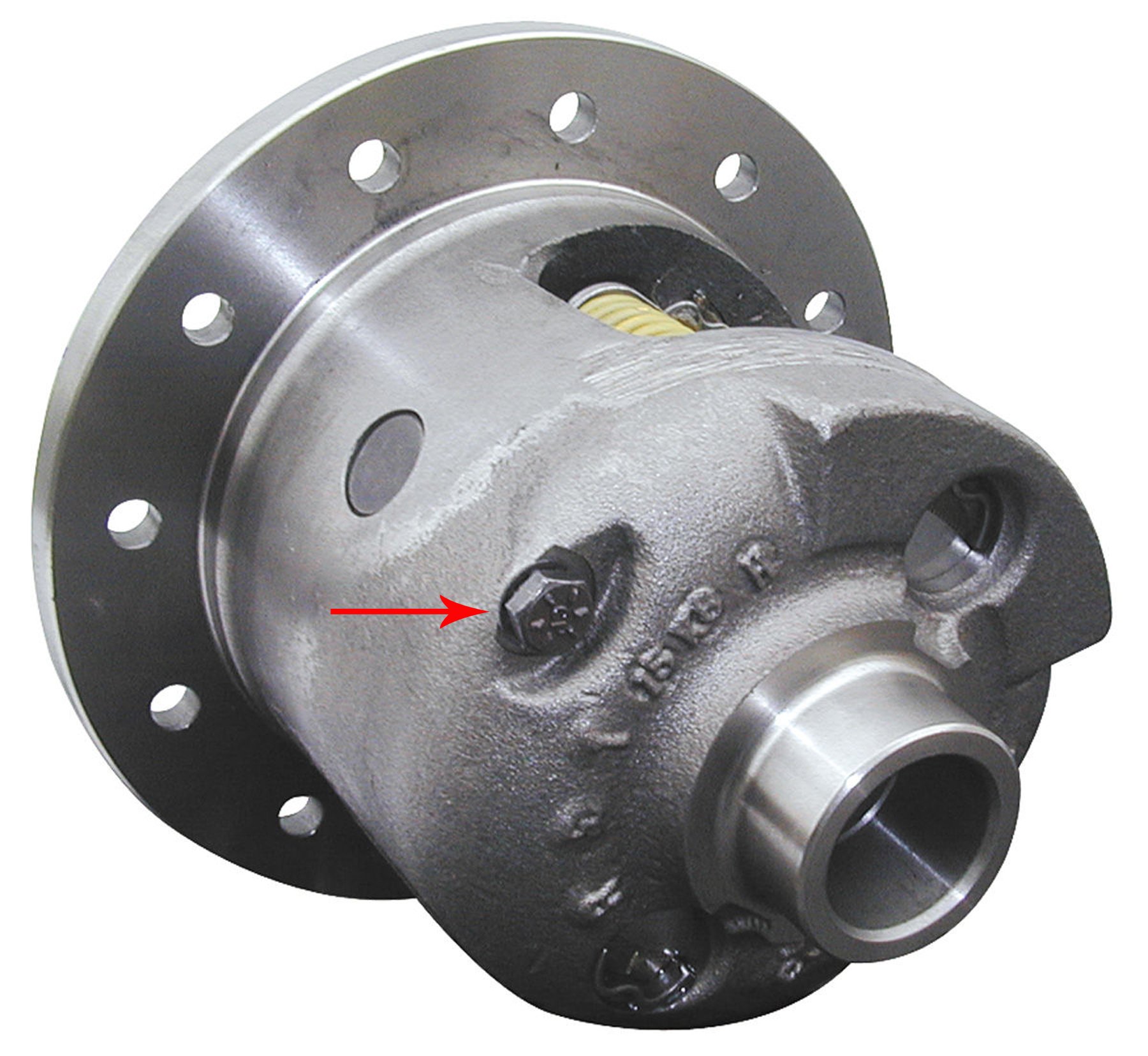
Another way to tell the divergence between an 8.2 and an 8.five rearend is to pull the cover and expect at the bolt holding the spider gear crosspin. If information technology takes a 1/2-inch wrench to remove it, it'south an eight.two. If it takes a 5/16-inch wrench to remove it, it's an 8.v.
Unlike Differentials
There are several differentials for the ten-commodities rearend. That being said, limited gear sets are offered for the carriers, especially if yous program to change gear ratios. Typically, 10-bolt differentials are specific to a series of gears. A Series 2 carrier will piece of work with 2.56 and college gears (numerically lower) such every bit ii.41. These are considered highway gears that are proficient for acme speed, non for off-the-line operation. The Series three carriers are expert for use with 2.73 and lower gears (numerically college), so three.08 and iii.73 gears work well.
Unfortunately, unless yous accept the ii units adjacent, it is nearly impossible to tell them apart. There is a difference, but you can't see it unless yous set both units on their side, and so measure the distance from that surface to the face where the ring gear attaches.
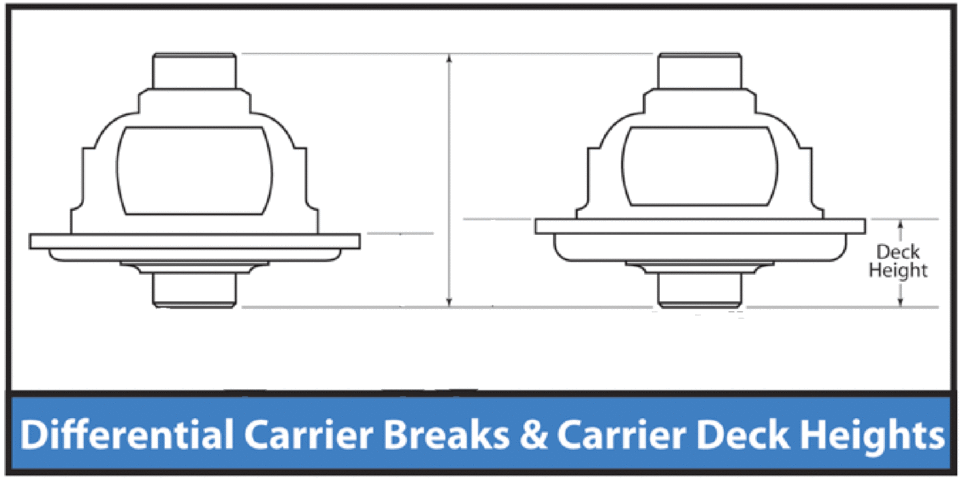
Differential Differences
7.5-inch Deck Heights
three.08 and numerically lower gears = 1.660-inch
3.23 and numerically higher gears = one.950- inch
8.2-inch Deck Heights
2.73 and numerically lower gears = 1.615-inch
3.08 and numerically college gears = 2.00-inch
8.5-inch Deck Heights
2.56 and numerically lower gears = 1.530-inch
2.73 and numerically higher gears = 1.720-inch
Hopefully, this short list will be enough to assist when you are scouring the swap meets and salve yards, and you lot will have an idea of what you're looking for, and how to identify what you detect.
pollardprionsprould1946.blogspot.com
Source: https://www.chevyhardcore.com/tech-stories/drivetrain/10-bolt-chevy/
0 Response to "1970 C10 12 Bolt Rearend How Do You Know What Gear You Have"
Post a Comment